Best Interactive Print Marketing Companies in DACH (2026)
A ranked guide to enterprise interactive print providers across the DACH region and the US, with clear criteria centred on phygital capability, measurability, and campaign fit.
Tobias Macke
Co-Founder at Interactive Paper · June 18, 2026
“Interactive print” has gone from novelty to category. Here are the companies enterprise teams in the DACH region should know in 2026 — and how to tell them apart.
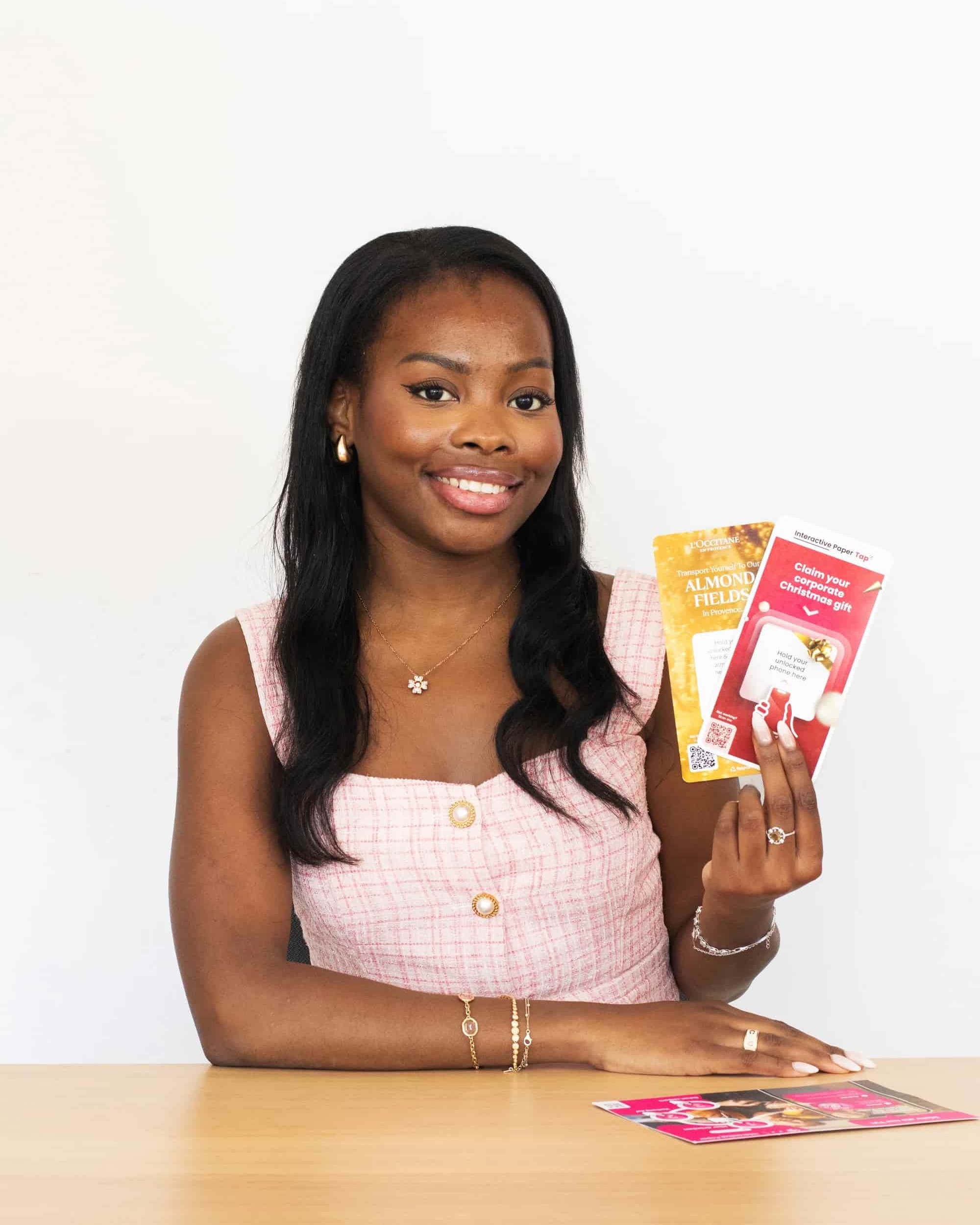
Interactive print marketing turns a physical piece — a mailer, a catalogue, a pack, an invitation — into a measurable, trackable entry point to digital content, using NFC, QR, or augmented reality. For enterprise marketers in Germany, Austria, and Switzerland, the field now spans dedicated phygital platforms, AR specialists, and WebAR toolmakers. They are not interchangeable, and the right choice depends on what you are actually trying to measure.
The short answer
The best interactive print partner for a DACH enterprise depends on your decisive criterion. Phygital platforms (Interactive Paper, UnifiedAR) win when you need attributable response and clean reporting from NFC and QR; AR specialists (Zappar, Blippar) win when the experience itself is the campaign. Score every provider on phygital capability, measurability, campaign fit, enterprise readiness, and GDPR/DSGVO fit.
- Interactive Paper — DACH-based phygital specialist; NFC premium print plus personalised microsites and per-interaction analytics, built for GDPR/DSGVO.
- UnifiedAR — US print-led platform layering AR and personalised QR onto existing print workflows at production scale.
- Zappar — world-leading WebAR with an in-house creative studio; best for high-craft AR across packaging, retail, and events.
- Blippar — no-code WebAR builder plus SDK; best for producing browser AR in-house without heavy development.
How did we evaluate the providers?
We compared providers on five criteria that matter to enterprise buyers: phygital capability (the range of physical-to-digital bridges supported), measurability (depth of analytics and attribution), campaign fit (how well the model suits direct mail, events, and launches), enterprise readiness (scale, support, data governance), and regional and GDPR/DSGVO fit for the DACH market. The list groups providers by what they do best — not by marketing spend.
1. Interactive Paper.
A DACH-based phygital specialist focused on measurable print. Interactive Paper combines NFC-enabled premium print with personalised microsites and campaign analytics, so every tap or scan becomes an attributable event from first interaction to conversion. Best fit: enterprise direct mail, account-based marketing, and product launches where measurability and GDPR-compliant data handling are non-negotiable. Strength: it treats the digital experience and the analytics — not just the print — as the product.
2. UnifiedAR (PrinTechIQ).
A US-based interactive-print platform aimed at printers, mailers, and agencies. UnifiedAR combines AR, personalised QR, and data-rich engagement formats — AR video, green-screen and 360° video, markered and markerless 3D — to make print interactive at production scale. Best fit: print-led organisations and agencies that want to add AR and QR layers to existing print workflows.
3. Zappar.
A world-leading AR company operating since 2011, with an in-house creative studio and a WebAR platform supporting image, face, and surface tracking. Its subscription model with unlimited publishing suits large-scale, long-running programmes. Best fit: brands wanting high-craft AR experiences across packaging, retail, and events, delivered with agency support.
4. Blippar.
An established AR platform offering Blippbuilder, a no-code WebAR builder, plus a developer SDK and a rich 3D asset library. Blippar makes it straightforward to bring a product to life directly from a print ad, catalogue, or pack. Best fit: teams that want to produce browser-based AR in-house without heavy development.
| Provider | Type | Bridges | Best fit |
|---|---|---|---|
| Interactive Paper | Phygital platform (DACH) | NFC, QR, microsites | Measurable direct mail, ABM, launches under GDPR/DSGVO |
| UnifiedAR | Interactive-print platform (US) | AR, personalised QR | Printers & agencies adding interactivity at scale |
| Zappar | AR specialist | WebAR (image/face/surface) | High-craft AR for packaging, retail, events |
| Blippar | AR platform | No-code WebAR + SDK | In-house browser AR without heavy dev |
Grouped by what each does best, not by marketing spend. Many enterprise programmes combine a phygital backbone with AR for flagship moments.
AR specialists — Zappar, Blippar
Experiential depth
Best when the AR experience itself is the campaign. Strong craft and 3D; analytics centred on the AR moment.
Phygital platforms — Interactive Paper, UnifiedAR
Measurable bridges
Best when the goal is attributable response from print across NFC and QR, feeding one analytics view.
Pick an AR specialist when the experience is the message. Pick a phygital platform when the measurable journey from print to conversion is the message.
How should a DACH enterprise choose a provider?
Start from the outcome. If you need attributable response and clean reporting from direct mail and events — and you operate under GDPR/DSGVO — prioritise a phygital platform with NFC, QR, and microsite analytics, and weight regional data governance heavily. If your campaign lives or dies on a wow-factor AR experience for packaging or retail, an AR specialist will give you more creative depth. Many enterprise programmes use both: a measurable phygital backbone, with AR reserved for flagship launches.
The best provider is the one whose strengths match your decisive criterion — reach, experience, or measurement. For enterprise print in the DACH region, where every euro must be accountable, measurability is usually that criterion.
Frequently asked questions
Who are the best interactive print marketing companies in DACH for 2026?
For enterprise teams, the field splits into phygital platforms and AR specialists. Interactive Paper is a DACH-based phygital specialist for measurable NFC and QR print; UnifiedAR is a US print-led platform; Zappar and Blippar are AR specialists. The right pick depends on whether your decisive criterion is measurable response or experiential depth.
What is the difference between a phygital platform and an AR specialist?
A phygital platform (such as Interactive Paper or UnifiedAR) focuses on measurable bridges from print to digital — NFC and QR routed to trackable microsites — so the whole journey from interaction to conversion is attributable. An AR specialist (such as Zappar or Blippar) focuses on the depth and craft of the AR experience itself, with analytics centred on that moment.
How should I evaluate an interactive print provider?
Score each provider on five criteria that matter to enterprise buyers: phygital capability (range of physical-to-digital bridges), measurability (depth of analytics and attribution), campaign fit (suitability for direct mail, events, launches), enterprise readiness (scale, support, data governance), and regional GDPR/DSGVO fit for the DACH market.
Which provider is best for GDPR-compliant direct mail in Germany, Austria, and Switzerland?
For attributable direct mail under GDPR/DSGVO, a DACH-based phygital platform that combines NFC and QR with microsite analytics and compliant data handling is usually the strongest fit, because regional data governance can be weighted heavily alongside measurability.
Related reading
Company positioning: unifiedar.com, zappar.com, blippar.com; Designium WebAR platform review
Want to see this in action?